
Book Club: The Science of Scaling

Welcome to the Nightowl Book Club—where faith, leadership, and caffeine collide. Each review explores timeless principles from great books and how they shape the way we lead, serve, and create unforgettable experiences in the world of coffee catering.
🚀 The Success Trap
Over the last nine years, I’ve learned just how seductive success can be. After only a small taste of achievement, by 2020 I had developed an overconfidence bias and a Midas complex that created an illusion of control. I launched a second company which failed, joined boards that quickly lost my interest, introduced new products that would never take off, and pridefully began juggling 20 projects at once—all while calling myself “busy.” Sound familiar?
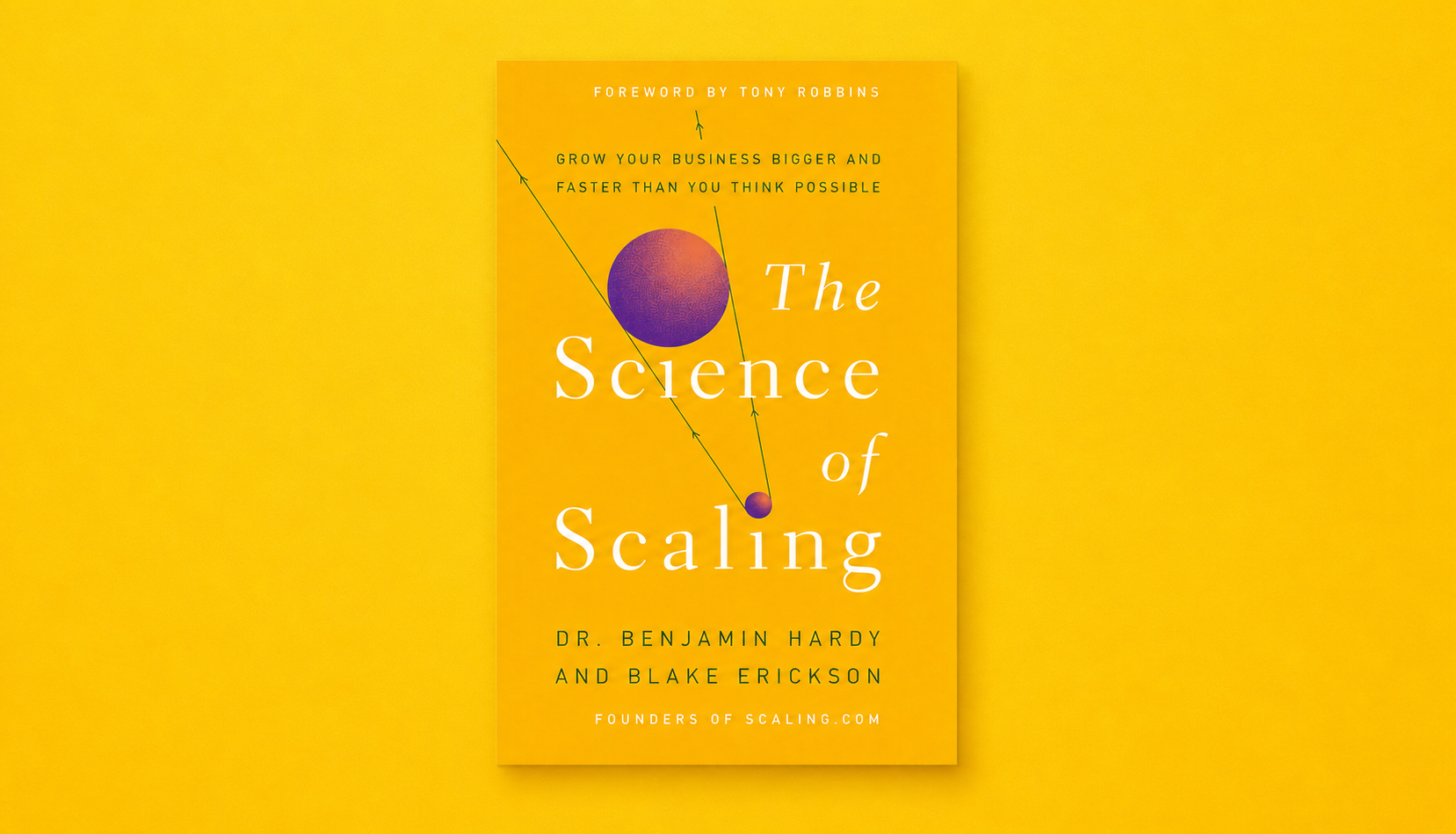
As founders, we often stay busy enough to feel productive—but never focused enough to become dangerous. The Science of Scaling exposes the biggest lie I believed for years: busyness equals success. Scaling is not primarily about adding more. It is about eliminating everything good that distracts you from becoming great—and removing anything that takes your attention away from taking your company to the next level.
Warren Buffett said it best: “The difference between successful people and really successful people is that really successful people say no to almost everything.”
1. Raise Your Floor 📈
Most people define themselves by their ceiling—their potential, raw talent, skill, and the person or company they hope to become. But your ceiling means very little if your floor remains low. Your floor is the minimum standard you accept from yourself. It is what you refuse to tolerate, excuse, repeat, hire, or become.
A high ceiling means you can occasionally perform at an elite level. A high floor means elite performance becomes normal. Amateurs can have incredible days; professionals build systems that make terrible days rare. They do not practice until they can get it right. They practice until they cannot get it wrong. Their standards do not disappear when they are tired, distracted, frustrated, or unmotivated.
Raising your floor is painful because it often requires eliminating things that still produce value. It may mean releasing a profitable client who drains the team, cutting a service that distracts from the core business, confronting a talented employee who resists accountability, or abandoning a project that is good but will never become great. The greatest threats are rarely obvious failures. They are the collection of “pretty good” commitments consuming the time and energy required for excellence.
As you become more successful, every yes becomes more expensive. One wrong client, project, partnership, or hire can destroy momentum, weaken culture, and follow you home. Stop asking only, “What should I do next?” Start asking, “What am I still allowing that is beneath the person and company I claim I am building?” Your growth may not explode because you discovered another opportunity. It may explode because you finally stopped negotiating with your standards.
As I write this, I am accepting that I can no longer continue authoring Nightowl's Party Blog. I love writing, and these articles are valuable resources that contribute to our SEO. They are good work. But I cannot become great if I continue spending my time on every good thing.
So, as I type this, I am making a decision: I will periodically contribute with Leadership pieces, but I will hand off the remaining six to eight company stories we publish each month. As CEO, I have to raise my floor in order to continue raising our company’s floor.
Now it is your turn. What good thing do you need to release so you can become great?
2. Use Time as a Tool ⏳
Parkinson’s law says work expands to fill the time available. Give a project six months, and—surprise—it becomes a six-month project. Give that same project six weeks, and meetings shrink, decisions speed up, unnecessary features vanish, and the essential work finally steps into the spotlight. The task did not change. The amount of tolerated waste did. Long timelines may feel responsible, but they often become luxury resorts for overthinking, bloated processes, fake preparation, and approval layers created mainly to justify more approval layers—cough, cough, corporate America.
Most people build timelines by asking, “How long will this probably take?” But that assumes the current process deserves to survive. A better question is, “What would need to be true for this to happen in half the time?” Suddenly, every step goes on trial. Do we need this meeting? Does this approval protect quality—or someone’s comfort? Does the customer care about this feature? Are we solving the real constraint, or hiding inside safe, productive-looking work?
An aggressive deadline is more than a due date. It is a filter. It exposes false requirements and forces you to identify the crux: the few issues that actually control the outcome. Compressed timelines also create faster feedback loops. You act, reality responds, you adjust, and you move again. Speed does not guarantee success, but slowness guarantees fewer chances to learn. A team that launches ten serious experiments will usually discover more than one that spends the same year polishing a single theory. When a deadline is distant, everything feels important. As consequences move closer, the noise loses its grip. You stop polishing work no one needs, confront the decision you have been avoiding, and focus on the part that determines whether the project lives or dies.
This does not mean every deadline should create panic or reckless execution. It means time should never be treated as an unlimited container. People wait to feel ready, but readiness rarely arrives first—consequences create it. A launch date, signed contract, public commitment, or scheduled event forces the mind to stop wandering and start solving.
Consider the project you have been “working on” for the past year. Is it truly that complicated, or have you simply given yourself enough time to stay distracted? You may not need more resources, research, or planning. You may need a deadline that makes avoidance impossible and distractions too expensive to keep.
3. What You Optimize For Shapes Everything 🧩
Tom Brady did not simply optimize for playing quarterback like other NFL quarterbacks. He optimized for winning Super Bowls. That goal shaped his preparation, health, contract decisions, longevity, and expectations for the people around him. His process was different because his goal was different. The same principle applies in business. A company trying merely to “grow” may chase almost anything. A company determined to become the undisputed best in a narrow category must become brutally selective.
When a business attempts to optimize simultaneously for revenue, comfort, recognition, flexibility, rapid growth, team happiness, and zero risk, the process becomes confused. Every decision requires negotiation because no single outcome has been given authority. Weak, vague, or competing goals create a goal problem—which, therefore, creates a culture problem.
A massive, specific goal forces a different question: What process would make this outcome inevitable? That question changes everything. It changes who you hire, which clients you pursue, how you price, what you measure, where leadership spends time, which services you eliminate, and how quickly decisions are made. The goal is not a slogan hanging on the wall. The goal is the architect of the entire system and culture.
Ask yourself what you are actually optimizing for—not what the strategic plan claims, but what your calendar, spending, hiring, and tradeoffs prove. Your real goal is revealed by what wins when two priorities collide. Choose one outcome powerful enough to organize the entire system, and then remove everything that does not support it. Concentration creates force. Competing priorities create motion without momentum.
🏆 My Big Takeaway
You don't need another strategy, planning session, or notebook full of ideas. You need a higher floor, a shorter clock, a sharper filter, and one goal powerful enough to reorganize your life around it. The next level cannot be reached while carrying everything from your current level with you. Some “good clients,” “good projects,” and “good opportunities” must be left behind—not because they failed, but because they are occupying the time and energy your best work requires.
One of my favorite lessons from The Science of Scaling was a question Steve Jobs reportedly asked his executive team: “What did you say no to this week?” Jobs understood that success is not measured by how many ideas you can generate. It is measured by what you ideas eliminate. Greatness demands the discipline of subtraction before it produces the rewards of multiplication.
So raise your standard. Compress your timeline. Decide what you are truly optimizing for. Then remove whatever cannot survive the future you say you want. Do not finish this book review inspired and return to the same overloaded calendar. Make a decision. Cancel something. End something. Decline something. Walk away from what's stealing your focus. I will go first. Today, I am resigning from a board I currently serve on. It is a good opportunity, a great organization—but it is no longer aligned with the future I am building.
Now it is your turn: What will you say no to today so your most important yes finally has room to grow?
For more Nightowl leadership and hospitality thinking, check out:
👉 Book Club: Rich Dad Poor Dad
⚙️ Book Club: Atomic Habits
✨ Book Club: Unreasonable Hospitality
And if your company is looking to create a high-energy, hospitality-driven activation through coffee catering, espresso catering, or custom mobile barista stations, book Nightowl Coffee here.